If you’re trying to eat healthier, reduce your saturated fat intake, or support your heart health, here’s what nutrition experts want you to know about butter and margarine.
What Are Butter and Margarine?
Butter is made by separating cream from milk, then churning the cream until it solidifies. The remaining liquid (buttermilk) is drained off, and salt is typically added.
Margarine, on the other hand, is made by blending vegetable oils with water to create a smooth, spreadable solid. Modern margarines are designed to emulate butter’s taste and texture, while offering a healthier fat profile.
Margarine vs Butter: Your Top Questions, Answered
1. Does butter or margarine have healthier fats?
The biggest nutritional difference between butter and margarine is the type of fat they contain.
Butter
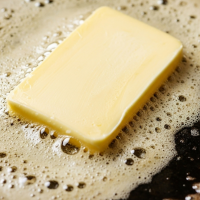
Butter, high in saturated fat, can impact heart health.
Butter is about 50% saturated fat.
According to preventive cardiology dietitian Julia Zumpano, eating too much saturated fat can raise LDL (“bad”) cholesterol levels, increasing your risk of heart attack and stroke.
How much is too much?
Doctors recommend no more than 30g for men and 20g for women daily. And just one heaped teaspoon of butter can contain up to 5g of saturated fat, says Dell Stanford, Senior Dietitian at the British Heart Foundation.
In other words, butter can use up a large chunk of your daily saturated fat “allowance” very quickly.
“Butter is also very energy dense, which means excess use may contribute to weight gain,” adds registered dietician Emer Delaney.
Margarine
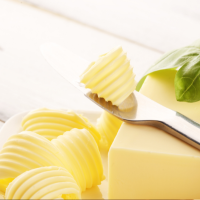
Margarine, lower in saturated fat and cholesterol-free, can be a heart-healthier alternative.
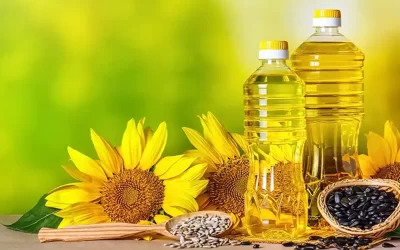
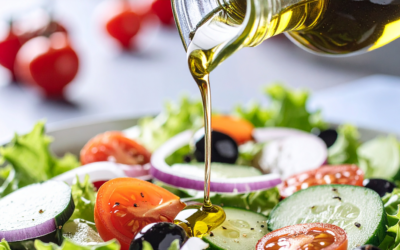
On the other hand, modern margarines are typically made from unsaturated vegetable oils like rapeseed, sunflower, or olive oil.
As a result, margarine can contain 50% less saturated fat than butter.
Replacing saturated fats (like butter) with unsaturated fats (like margarine) has been shown to:
-
- Lower “bad” LDL cholesterol and, in turn,
- Reduce the risk of heart disease, heart attack, and stroke.
2. How did margarine come to be misunderstood?
In the mid-twentieth century, butter came under fire for its high saturated fat levels. Nutritionists recommended margarine as a healthier alternative.
At the time, though, margarines were made using a process called hydrogenation, which created trans fats. These were later linked to increased risk of heart disease.
Today, that’s no longer the case.
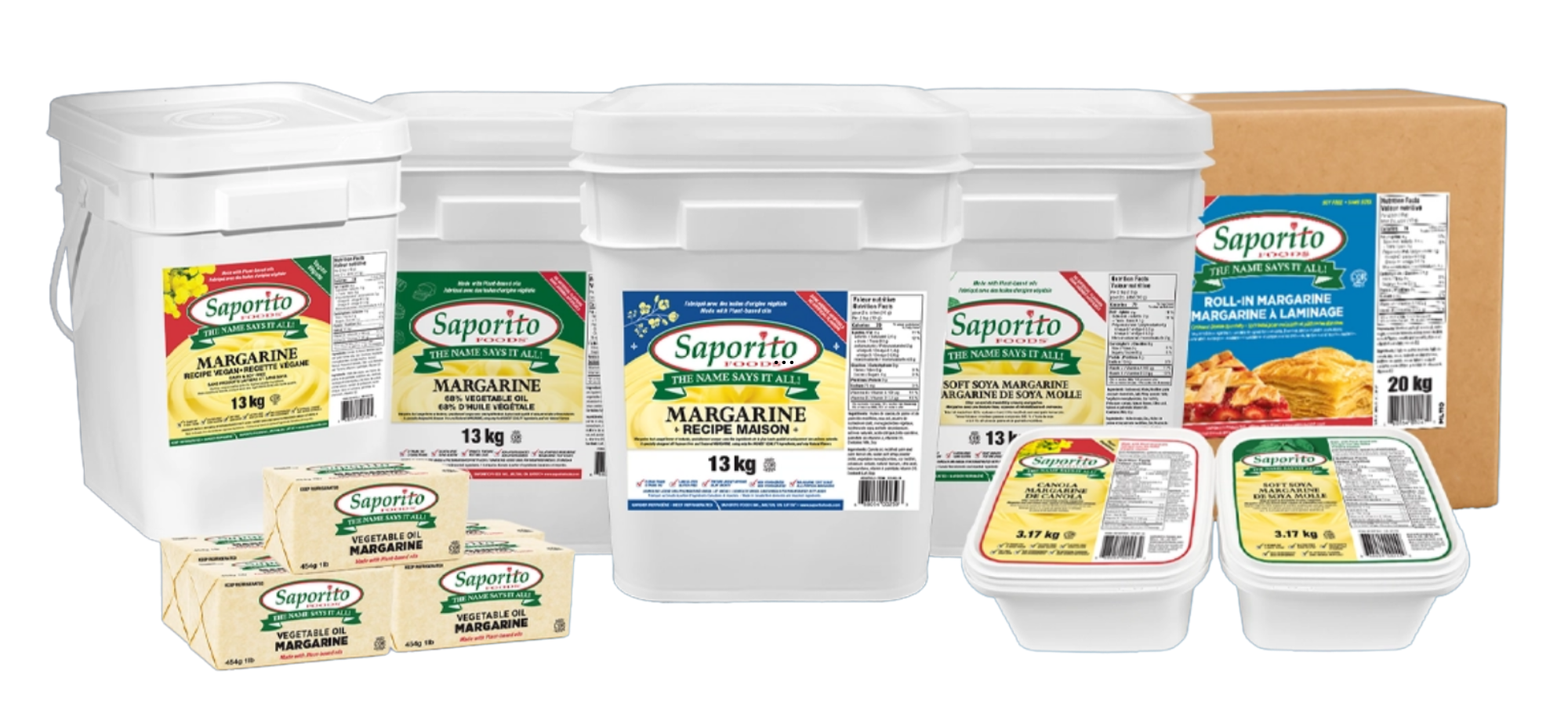
Modern margarines like Saporito Foods’ are trans fat-free, making them excellent alternatives to butter.
3. Are some margarines better than others?
Yes! As Zumpano puts it: “not all margarine is created equal.”
You can choose a healthy margarine by reading its nutrition label.
If you’re trying to lose weight, choosing a lighter, lower-calorie margarine can help.
4. Is margarine an “ultra-processed” food, and does that matter?
Diets high in ultra-processed foods can negatively impact health. But processing alone doesn’t determine whether a food is healthy.
As Professor Lisa Harnack of the University of Minnesota points out, “Breakfast cereals are mostly ultra-processed, but they’re a great source of fibre.”
In the same way, margarine provides important nutrients like:
- Essential fatty acids (Omega-3 and Omega-6)
- Vitamins A and D
Especially if you’re using it as a replacement for saturated fats like butter, margarine can provide real nutritional value.
The Bigger Picture:
Your Spread Is Just One Part of a Healthy Diet

While the choice between butter and margarine matters, experts agree your overall diet matters more.
University College London’s Professor Anastasia Kalea agrees: “No food stands in isolation when it comes to risks or benefits.”
Instead, context is key. As Clare Collins, laureate professor of nutrition and dietetics at Newcastle University in Australia, explains:
But this isn’t what most people eat. People have diets dominated by energy-dense, nutrient-poor food. We’re not cooking from scratch, or buying as much fruit and vegetables, so we don’t realise that our fat intake is as high as it is.”
With that in mind, small choices — like switching from butter to margarine — add up over time.
It’s also not just about the spread itself, but what you’re eating it with.
“If you’re putting butter on a corn-on-the-cob, rather than a croissant, it’s a completely different meal,” says Collins.
Pairing a heart-healthier spread like margarine with whole grains, vegetables, and balanced meals helps support better long-term nutrition.

The Bottom Line: Butter or Margarine?
When choosing between butter and margarine, the evidence is clear.
Butter:
❌ High in saturated fat
❌ Raises LDL cholesterol
❌ Increases heart disease risk
Margarine:
✔ Lower in saturated fat
✔ Cholesterol-free
✔ Made from heart-healthy oils
✔ Enriched with vitamins A and D
If you want a simple upgrade for your heart, switching from butter to margarine is one of the easiest and most effective changes you can make. Whether you’re topping toast, cooking vegetables, or baking, choosing modern, trans-fat-free margarine over butter helps reduce saturated fat and support better health.
References and Further Reading:
-
- British Heart Foundation
Margarine vs. butter: which is healthier?
- British Heart Foundation
-
- Cleveland Clinic
Margarine or Butter: The Heart-Healthiest Spreads
- Cleveland Clinic
-
- Diabetes Australia
What’s better, butter or margarine?
- Diabetes Australia
-
- Everyday Health
How to Pick a Margarine for Healthy Cholesterol Levels
- Everyday Health
-
- Harvard Health
Butter vs. Margarine
- Harvard Health